What Does Molting Look Like in Chickens? (It's Normal)
Last updated November 2026
What does molting look like in chickens? It can look like someone ripped open a feather pillow in your coop: piles of feathers, bald patches and scruffy, smaller-looking hens. It's normal. Most adult chickens molt about once a year, usually in fall, as they trade worn feathers for a new winter coat. Some hens molt hard and some so lightly you barely notice, and full regrowth can take several months.
I'm Donna from The Coop Scoop, and I've kept chickens for more than 30 years. If you're new to chickens, your first molt can be a shock. One morning everything looks fine, and the next it looks like a chicken blew up in the yard. Here's what to expect, how to tell molting from mites, and what I do to help my girls through it.
Chicken molting: quick answers
Question | Short answer |
|---|---|
Is molting normal? | Yes. It's a natural, usually yearly feather replacement. |
When do chickens molt? | Usually fall, ahead of winter, though timing can shift from year to year. |
Do young chickens molt? | Pullets a few months old often don't molt their first year. Birds about a year or older usually do. |
How long does it take? | Feathers drop over days, but full regrowth can take several months. |
How can I help? | Keep them warm if it's cold, add electrolytes and vitamins to their water, and offer a little extra protein. |
What does a molting chicken look like?
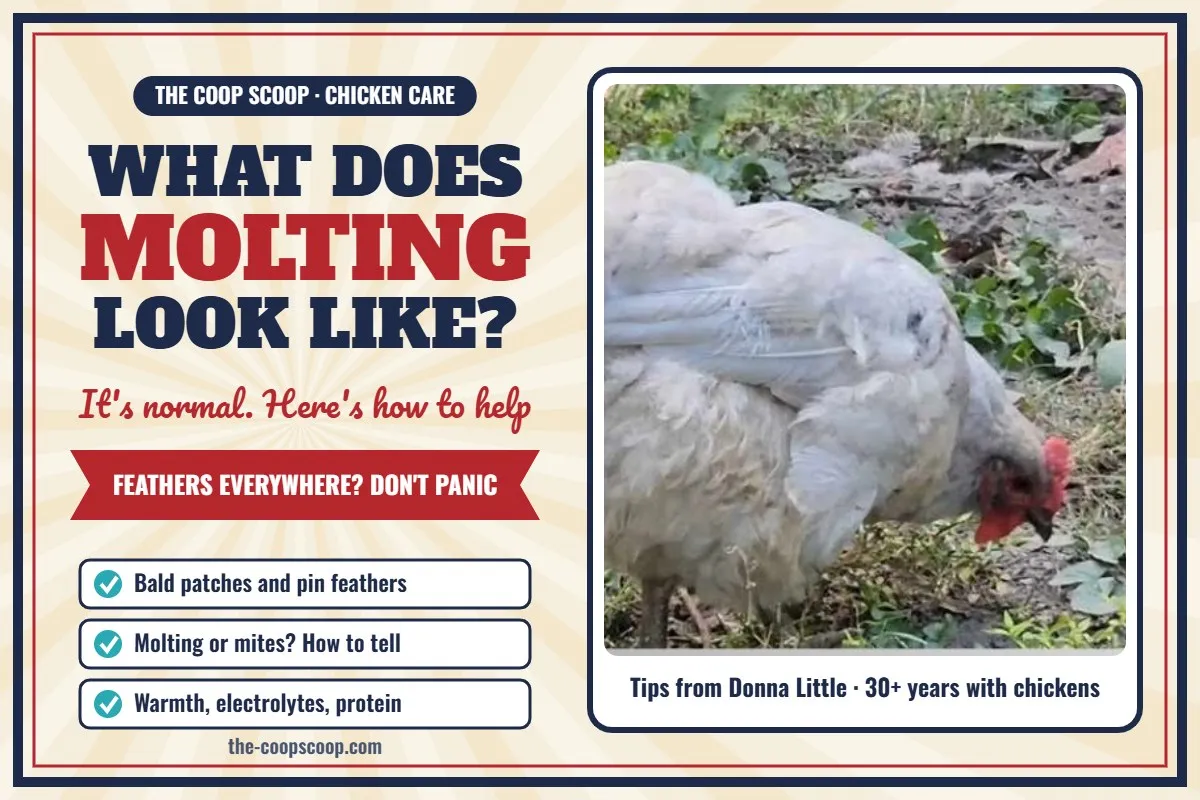
Feathers everywhere. You may walk into the coop and find what looks like a burst feather pillow, or piles of feathers where your hens like to lounge.
Bald patches. My hen Delilah has walked around with a completely bald rear end during a molt.
Scruffy, raggedy birds. Older hens get worn-looking feathers. My Maisy looked like a mess and needed a good, heavy molt.
A "shrinking" hen. Over a few days, a hen can look half her size because so many feathers are gone.
Pin feathers. New feathers come in looking like little sticks poking out of bald spots. That's the new winter coat, not a problem.
When do chickens molt, and do all of them molt?
Molting happens pretty much every year, most often in fall, to prepare chickens for winter. Timing can surprise you. Here in the South we're usually warm well into October, yet one year my flock started molting early, and almost every hen was in some stage of it.
If your chickens are only four to six months old, they may not molt their first year. Birds that are about a year old or older usually will, though not always every single year. Some hens molt hard and fast, and others molt so lightly you'd only notice if you knew that bird well.
Is it molting or mites?
Molting is the most likely reason for feather loss in late summer and fall. But if your chickens are overpreening, scratching and itching a lot, and you see feather loss without new feathers growing back, check for mites. Mites are most active at night, so go out after dark with a headlamp (or have someone hold a flashlight) and look your birds over.
Does molting hurt chickens?
I don't know if it's painful, but it's definitely uncomfortable. Even my friendliest hens don't want to be picked up or handled while they're molting. My Charlotte normally loves sitting with me, and during a molt she doesn't want my hands on her. You'll also see them scratching at new feathers as they come in. During a heavy molt, some hens just don't feel good and may have less energy.
How to help a molting chicken
Keep them warm if it's cold. My hen Mabel molted late, in December or January, and lost so many feathers that I brought her inside at night for the few really cold nights in a row. She still went out during the day once it warmed up. Losing feathers in the cold is like having to go outside without your coat.
Add electrolytes and vitamins to their water. If a molting hen is struggling or has low energy, electrolytes with vitamins from the farm store give her a boost, and water is the easiest way to get it into her. I also give probiotics in their water during winter.
Offer a little extra protein, but don't overdo it. Growing feathers takes a lot of energy. I scramble eggs for the flock most days during a molt (about half a dozen eggs back when I had 26 chickens), sometimes with garlic and herbs. I also give boiled eggs, leftover veggies and even a little meat from the fridge.
Treat them to black soldier fly larvae. My girls love them, and they're an easy protein boost from the feed store or online.
How long does molting last?
Hens lose their feathers over the course of days, but it can take several months for everything to grow fully back in. Don't be alarmed if it seems like it's taking forever. Once you see pin feathers, the new coat is on its way.
Chicken molting FAQ
Is it normal for chickens to lose a lot of feathers in the fall?
Yes. Fall feather loss is usually molting, a normal process where chickens replace old feathers with a new winter coat. Some hens molt hard and some barely show it.
Do chickens molt every year?
Most adult chickens molt about once a year, usually in fall, though not always every single year. Pullets a few months old often skip molting their first year.
How can I tell molting from mites?
With mites, you'll often see heavy preening and scratching, and feather loss without new feathers growing back. Check your birds at night with a headlamp, when mites are most active.
What should I feed a molting chicken?
Their regular feed plus a little extra protein, like scrambled or boiled eggs, black soldier fly larvae, or a bit of leftover meat. Don't overdo the protein. Electrolytes and vitamins in the water can help a hen with low energy.
How long does it take for a chicken's feathers to grow back?
The feathers fall out over days, but full regrowth can take several months. Pin feathers that look like little sticks are the new feathers coming in.
Get Donna's monthly Coop Scoop newsletter
Seasonal flock tips from our backyard, once a month. Sign up for the newsletter.
Related: Why did my chickens stop laying in fall? · Do chickens need heat in winter? · How do you clean a chicken coop for winter?
About the author
Donna Little has raised backyard chickens for more than 30 years and shares her flock on The Coop Scoop YouTube channel. She's the author of Backyard Chickens Made Simple.