
How Do You Clean a Chicken Coop for Winter? Donna's Fall Coop Cleanout
By Donna Little · Published November 3, 2026 · Last updated November 3, 2026
To clean a chicken coop for winter, take out all the old bedding, wipe down the surfaces, treat the cracks and nest boxes where mites like to hide, let everything dry, and put in fresh, dry bedding. A fall cleanout doesn't need to be as deep as a spring clean. The goal is a clean, dry, draft-free coop with good ventilation going into the cold months.
Quick facts
Question | Short answer |
|---|---|
When to do it | Early fall, before the cold sets in. |
How deep? | Lighter than spring: everything out, surfaces wiped. No wall scrubbing. |
Most important step | Get every bit of old shavings out. |
Mite prevention | Treat cracks, roosts, nest boxes and poop boards. |
Winter goal | Dry, draft-free, but still ventilated. |
Time | A morning (about an hour for Donna's coop). |
Fall coop cleanout, step by step
Take everything out. Feeders, waterers, removable nest box liners and anything stored in the coop.
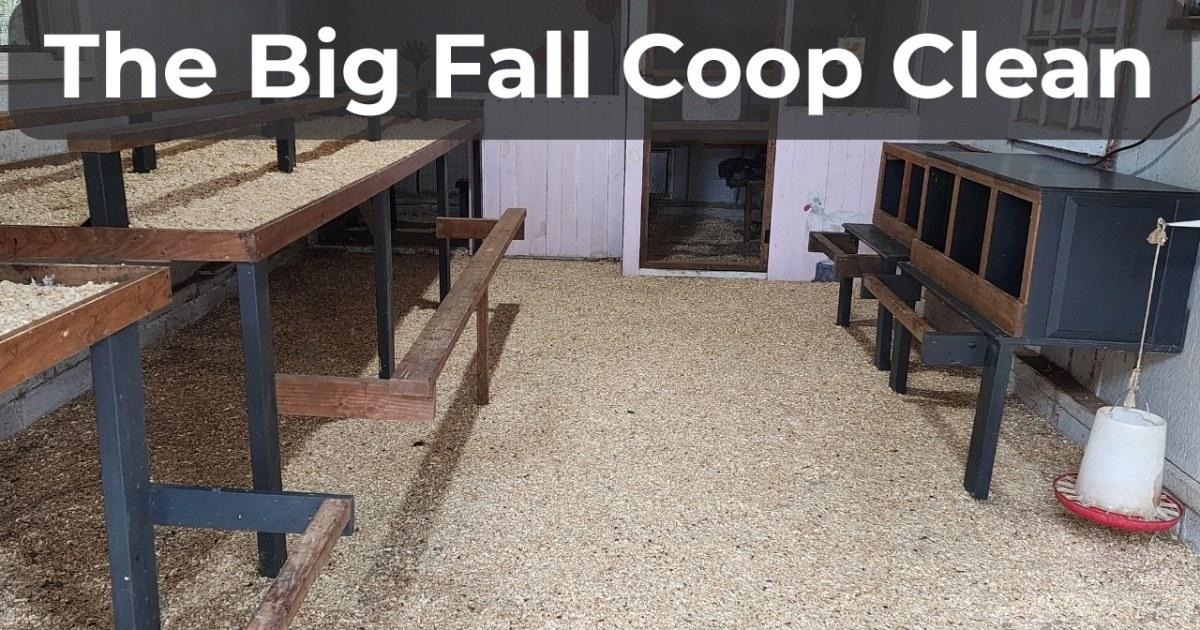
Remove all the old bedding. Donna's rule: "I just make sure I've gotten all of my shavings out. There's none left." Old bedding holds moisture and ammonia, which is the last thing you want in winter.
Scrape and wipe the surfaces. Scrape the poop boards and roosts, then wipe down the surfaces. Save the deep scrub for spring.
Treat the places mites hide. Spray along the perimeter, cracks, roosts, poop boards and nest boxes. Donna tried a plant-based peppermint and clove poultry spray this year as a pest deterrent. (It's meant to keep pests away, not to treat an infestation.)
Let it dry. Leave the doors and windows open until everything is fully dry before adding bedding.
Add fresh, dry bedding. Put fresh shavings on the floor and in the nest boxes.
Put it back together and check for drafts and ventilation. Seal any drafts at roost level, but keep vents open up high so moist air can escape.
Why is a fall cleanout lighter than a spring clean?
Donna saves the deep clean (scrubbing walls and every corner) for spring, when it's warm enough for everything to dry fast and the flock is outside more. In fall, the job is to start winter with clean, dry bedding and no pests, without soaking the coop right before cold weather.
How do you keep a coop healthy all winter?
Keep it dry. Damp air and wet droppings cause frostbite and respiratory problems. Change wet bedding as soon as you see it.
Ventilate, don't seal. A completely sealed coop traps moisture. Leave vents open up high.
Block drafts at roost level. Chickens stay warm in their feathers as long as wind isn't blowing directly on them.
Check often. Look over your birds and the coop regularly through the winter.
Fall coop cleaning FAQ
How often should you clean a chicken coop?
Spot-clean droppings and wet bedding weekly, and do a full cleanout at least twice a year: a deep clean in spring and a lighter one in fall before winter.
What's the best way to prevent mites in a chicken coop?
Keep bedding clean and dry, and treat cracks, roosts and nest boxes during your cleanouts. Check your birds under their feathers (around the vent) now and then.
Should you put fresh bedding in the coop before winter?
Yes. Start winter with all-new, dry bedding, and replace any wet patches through the season.
Should you close up a chicken coop for winter?
Close off drafts at roost level, but don't seal it tight. Chickens need ventilation so moisture can escape, or you risk frostbite and respiratory illness.
Do I need to scrub the coop walls in the fall?
Not usually. Donna removes all the bedding and wipes surfaces in fall, and saves the deep scrub for spring when things dry quickly.
Sources
Iowa State University Extension, Keep Your Chickens Healthy and Producing During Winter Months
Keep learning
📖 New to chickens? Get a free preview of Donna's e-book, Backyard Chickens Made Simple: https://www.the-coopscoop.com/free-preview-page
💌 Get Donna's monthly Coop Scoop newsletter: https://www.the-coopscoop.com/newsletter-signup-page
About the author
Donna Little has raised backyard chickens for more than thirty years and shares what she's learned on The Coop Scoop YouTube channel. She's the author of Backyard Chickens Made Simple and keeps a mixed flock of standard hens and bantams with her husband, Mark.