
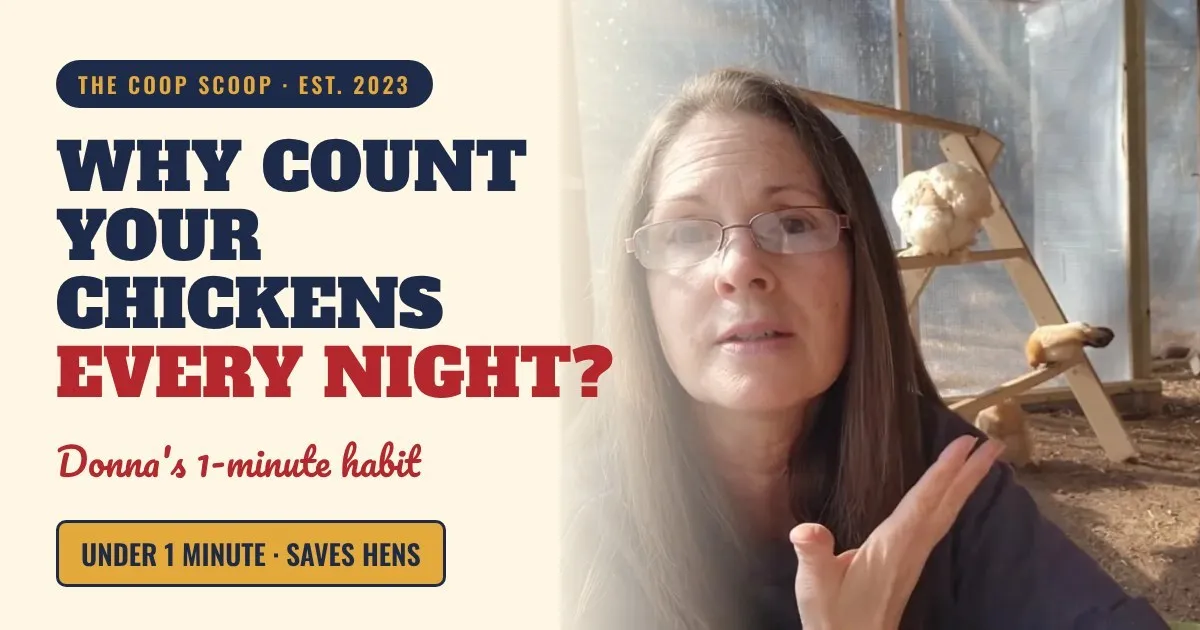
Why Should You Count Your Chickens Every Night?
Last updated October 21, 2026
Count your chickens at roost every night because it's the only way to know that every bird actually made it inside. A hen can get shut out by an automatic door, tuck herself away somewhere to lay, or get caught by a predator. A head count takes under a minute, even for a flock of 42, and it can be the difference between a safe night and frostbite or worse.
I'm Donna from The Coop Scoop. I've kept chickens for more than 30 years, and I count mine every single night. Here's why, and how one cold night proved it.
Nightly head count: quick facts
Question | Answer |
|---|---|
How long does it take? | Under a minute. I count my 42 chickens in less than a minute. |
When should you do it? | At roost time, right before you close the coop for the night |
What do you need? | Your phone's flashlight |
What can it catch? | A hen shut out by an automatic door, hiding to lay, injured or taken by a predator |
When does it matter most? | Cold snaps, storms, and any night predators are around |
How often? | Every single night, even when they're "always in" |
Why should you count your chickens every night?
All the work you put into keeping your flock warm and safe doesn't help a chicken that's stuck outside. The coop can be perfect, but if one hen didn't make it in, none of it reaches her.
During a winter storm, I read posts in chicken groups from three keepers whose hens were left outside overnight. None of the hens died, but all three had frostbite: swollen combs and damaged toes. That means weeks of suffering for the bird and weeks of care for the owner. A one-minute head count would have prevented every one of them.
What can a nightly count catch?
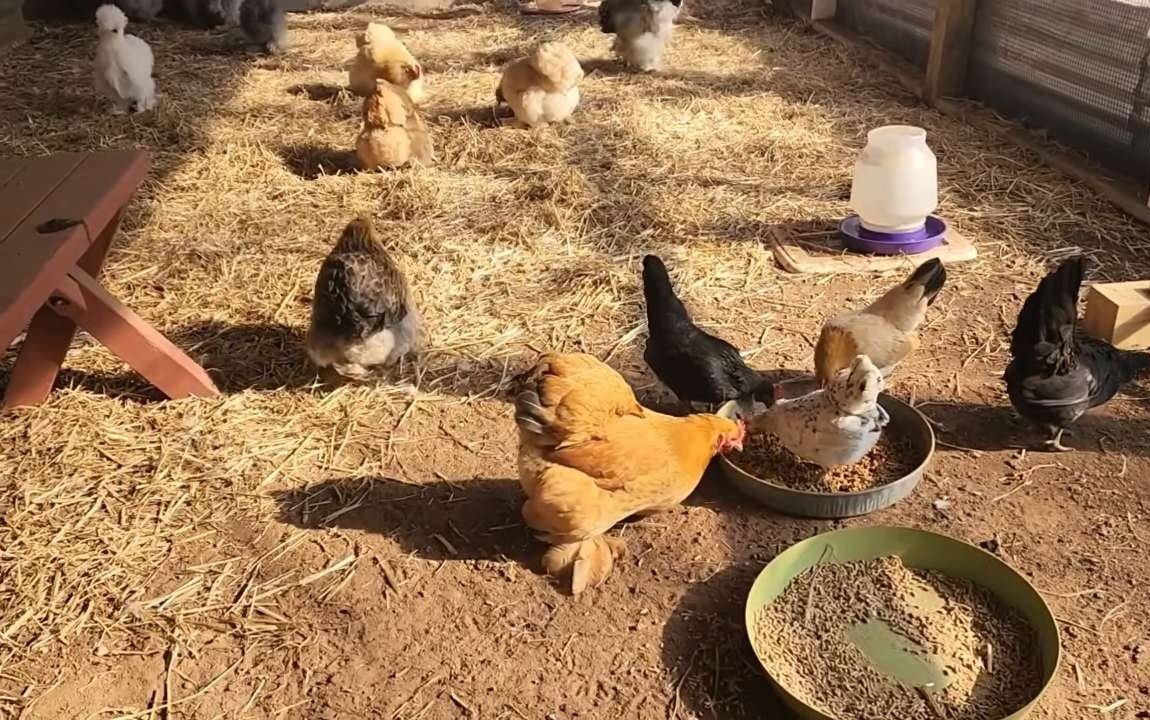
A hen shut out by an automatic door. One of those three hens was locked out because the door closed before she got inside.
A hen hiding to lay. Some hens lay wherever they please and can get stuck there when it gets dark.
A hen who's sick or hurt and didn't make it to the roost.
A predator problem. If someone is missing and you can't find her, you know to look and to check your coop's security.
How do you do a head count in under a minute?
Wait until the flock has gone to roost. It's easier to count birds that are settled.
Turn on your phone's flashlight and look along every roost bar and in the corners.
Count every bird. If the number feels off, count again. I sometimes count twice to be sure I didn't miss anybody.
Make sure you know your total. When your flock changes (new birds, a loss, a group being integrated), update your number.
Only then lock the coop for the night.
What should you do if a chicken is missing?
Don't lock up yet. Grab the flashlight and check the run first, then the spots where your hens like to lay or hide: under steps, behind boxes, in corners, and under bushes. A hen that's about to lay may stay put even after dark.
When you find her, bring her in. If she's been out in the cold, check her comb and toes for swelling or color changes that could mean frostbite, and keep an eye on her for the next few days.
The night Sophia didn't make it in
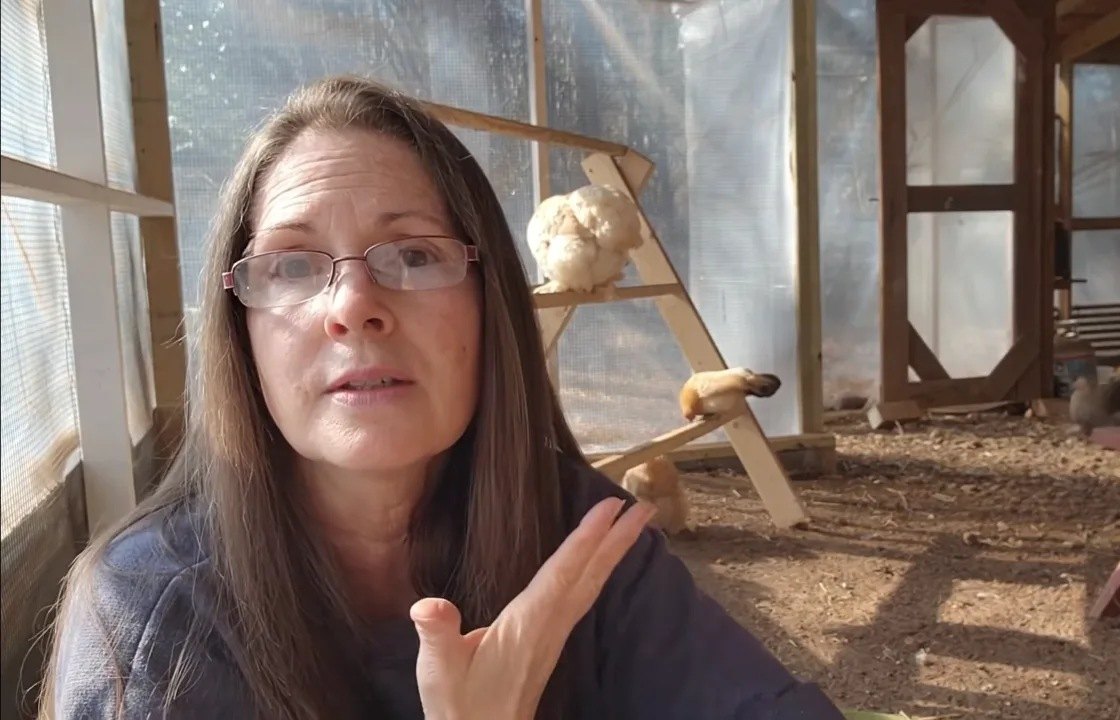
The night that made me record this video, the temperature was dropping into the low teens. I planned to bring my Seramas into the house, so I waited until they went to roost and did my head count before picking them up.
I have 13 bantams. There were only 12 on the roost.
I had just walked through both runs to lock them up and hadn't seen anyone. It took me a minute to figure out who was missing: Sophia, my little splash Serama. I finally found her tucked under the step stools in the run, sitting on four eggs. She wasn't broody. She was about to lay, it got dark, and she stayed put.
My bantams are always inside by about 5:45 this time of year. There has never been a night they weren't in. If it had been a mild night, it would have been easy to say, "Everybody's always in," skip the count and walk away.
Seramas are tiny, tropical birds. Sophia weighs maybe 10 or 11 ounces. Even if she'd survived that night, she would have suffered. And it happened on the coldest night we'd had in a couple of years. You just never know.
Is it only about cold weather?
No. It's about predators too. My big girls free range all day, so anyone left out at night would be out in the open. We check our game camera every night, and the same night I found Sophia, there was a coyote in our yard. Everything out there wants to eat your chickens.
Nightly head count FAQ
What time do chickens go to roost?
Chickens head to roost as it gets dark, so the time shifts with the seasons. My bantams are in by about 5:45 in winter. Count them after they've settled, right before you lock up.
Where do missing chickens usually hide?
Check the run first, then any place they like to lay: under steps or stools, behind boxes, in corners, and under bushes. Sophia was under the step stools in the run, sitting on eggs.
Should I lock the coop every night?
Yes. Predators are active at night. Lock up after your head count, so you know everyone is inside before the door closes.
If I have an automatic coop door, do I still need to count?
Yes. An automatic door closes on schedule whether or not every hen is inside. One of the frostbitten hens I read about was shut out by an automatic door.
How long does a head count take?
Usually less than a minute. I count my 42 chickens in under a minute.
Keep your flock safe all winter
Donna's e-book, Backyard Chickens Made Simple, covers coop setup, daily routines and keeping your flock healthy. Read a free preview here.
Choosing birds for egg production? Read Are Golden Comet Chickens Good Egg Layers? Just getting started? Read The Biggest Beginner Chicken-Keeping Mistakes Donna Learned the Hard Way.
Want more tips like this each month? Get The Coop Scoop newsletter.
Coming Saturday: Do You Need a Rooster?
About the author
Donna Little has raised backyard chickens for more than thirty years and shares what she's learned with 30,000+ subscribers on The Coop Scoop YouTube channel. She's the author of Backyard Chickens Made Simple and keeps a mixed flock, including a group of Serama bantams, with her husband, Mark.