
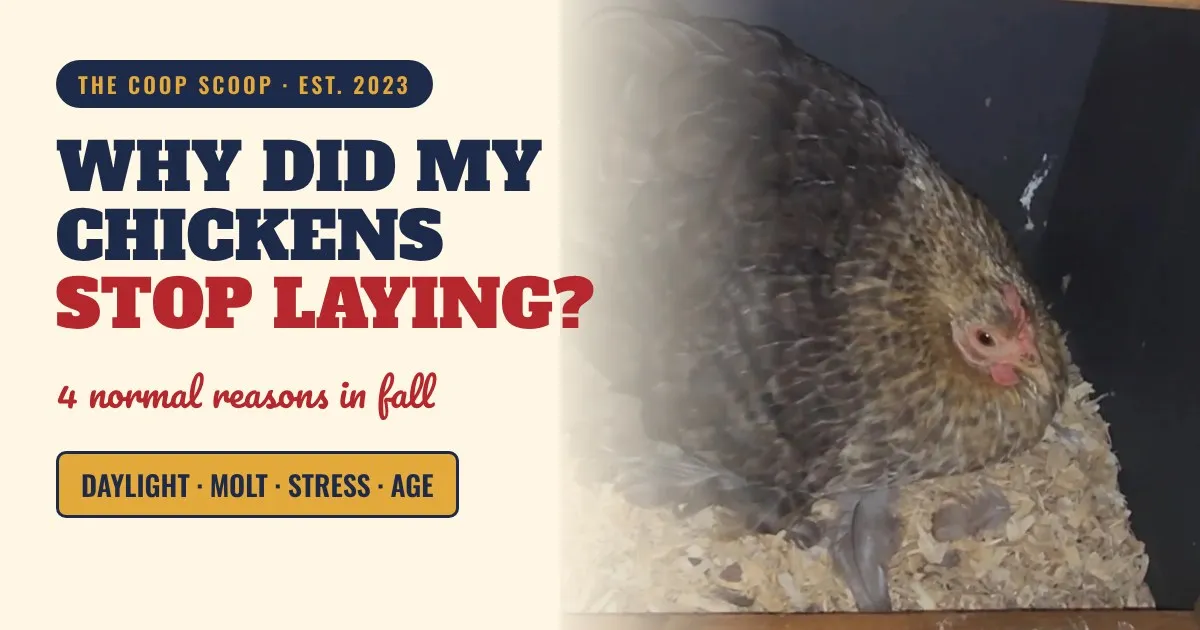
Why Did My Chickens Stop Laying in Fall? 4 Normal Reasons
Last updated October 17, 2026
Chickens usually stop or slow down laying in fall for normal reasons: shorter days, molting, stress and age. Hens lay best with about 14 to 16 hours of daylight, and fall days are shorter. Most healthy flocks pick back up as the days get longer in late winter and spring. A hen that stops laying and looks sick is the one to worry about.
I'm Donna from The Coop Scoop. I've kept chickens for more than 30 years, and every fall I hear the same question in the chicken groups: "Why did my hens stop laying?" Here's how to tell what's normal and when to look closer.
Why chickens stop laying in fall: quick facts
Reason | What's happening | What to do |
|---|---|---|
Less daylight | Hens lay best with about 14–16 hours of light; fall days are shorter | Be patient, or add morning light on a timer |
Molting | Energy goes into growing new feathers instead of eggs | Higher-protein feed during the molt |
Stress | A predator scare, a chasing dog, coop changes or new flock members | Remove the stress; laying returns |
Age | Laying slows around age 3 and keeps tapering | Add younger hens every couple of years |
When to worry | Not laying plus hunched, puffed up, isolating or not eating | Look closer or call an avian vet |
Reason 1: Less daylight
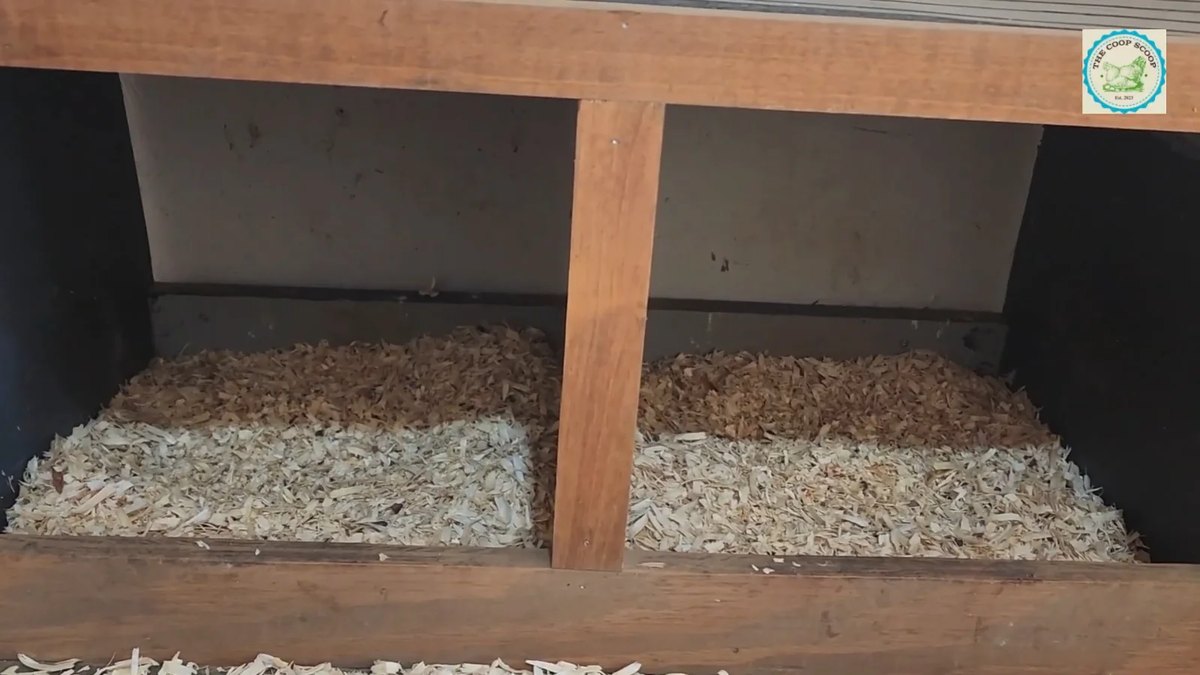
The days get shorter as summer turns to fall, and hens need about 14 to 16 hours of daylight to keep their laying cycle going. When the light drops, so do the eggs.
This catches a lot of new keepers off guard. Pullets hatched in late spring may lay for a few weeks and then stop, or they may not start laying at all until next spring. Chicks hatched very early in the year are more likely to lay through their first winter, but that's not a guarantee.
If your hens slowed down or stopped but they're eating, drinking, bright and alert, it's probably just the season.
Reason 2: Molting
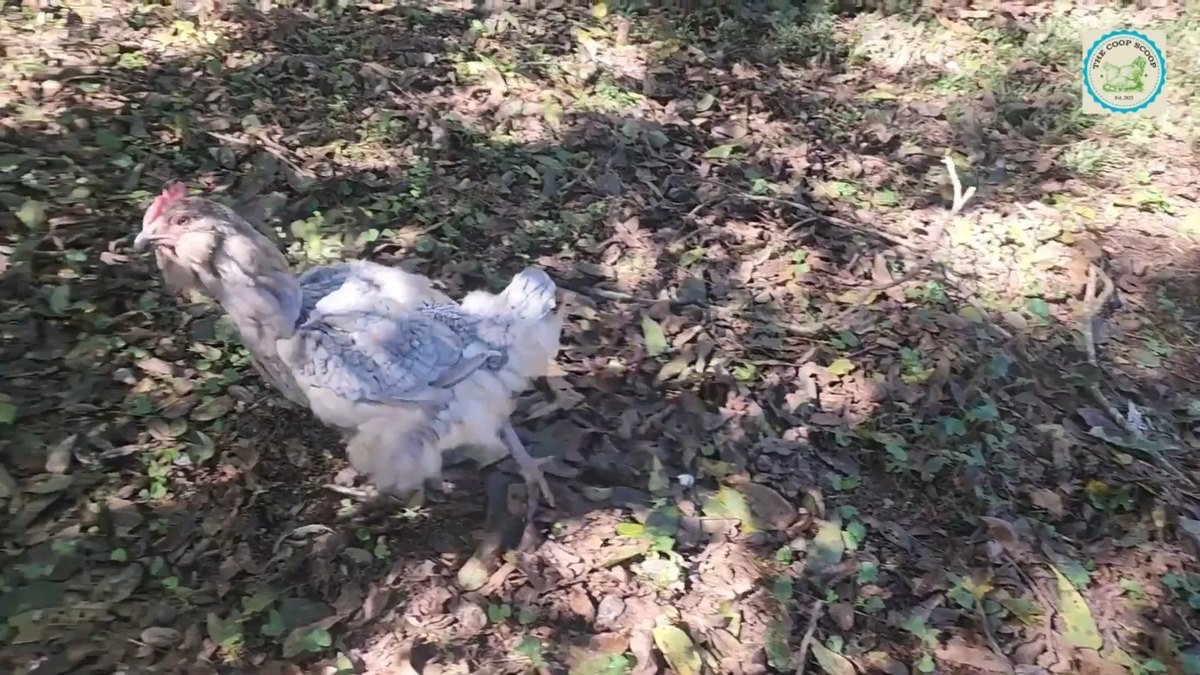
Molting takes a lot of energy. Your hens have to drop their old feathers and grow a whole new set, and egg-making is usually the first thing to go. My girls never lay while they're molting. Right now I have 20 standard-size hens and I'm getting three or four eggs a day.
Don't get impatient. Let them finish the molt, and support them with a higher-protein feed while they regrow those feathers. A little poultry vitamin in the water now and then can help too. They'll get back to work when their bodies are ready.
Reason 3: Stress
Stress can stop laying even when daylight and molting have nothing to do with it. A dog that gets in the yard and chases them, a coyote outside the fence, or a hawk swooping into the run can do it, even if nobody gets hurt. Their bodies go on high alert and save energy for survival instead of eggs.
Smaller things count too. Big changes inside the coop or adding new chickens to the flock can cause a short pause. Chickens can be drama queens. Give them time and it usually passes.
Reason 4: Age
Hens lay their best in their first couple of years. Around age 3 you'll see many of them slow down a lot. My two oldest girls, Grace and Ivy, are 5-year-old Lavender Orpingtons. They still lay, but maybe a couple of eggs a month now.
Meanwhile my bantams are laying like crazy, because they're all young. If you want steady eggs, plan to add a few new hens every couple of years so your flock has a mix of ages.
Should you add light to the coop?

Some keepers add a light to the coop so the hens get 15 or 16 hours of "daylight" and keep laying. I don't, because I feel my hens need the rest. But I understand that sometimes you really need the eggs, especially when feed isn't cheap.
If you do add light, follow these rules:
Put the light on a timer.
Have it come on in the morning, a couple of hours before sunrise.
Never let it switch off at night. If the light goes out at 10 PM, half your hens may be on the floor eating or pecking around. Chickens can't see in the dark, so they panic and can get hurt trying to get back up to the roost.
Let the sunset end the day naturally, so they go up to roost on their own.
Don't keep it up as they age. Extra light is hard on older hens. Like me, older hens need their rest.
When should you worry about a hen that stopped laying?
Worry when a hen stops laying and shows other signs that something's wrong:
She stays away from the flock.
She isn't foraging and lies down more than usual.
She wants to stay inside the coop on a beautiful day.
She stands alone, puffed up and hunched, with her tail and head down.
She might be egg bound.
That's when it's time to dig deeper, and to call an avian vet if you're not sure what's wrong. If she's otherwise healthy, there's no need to worry. The eggs will come back, unless she's just getting older.
Fall laying FAQ
Why did my chickens suddenly stop laying?
In fall, it's usually shorter days, molting or a recent stress like a predator scare or new flock members. If your hens are eating, drinking and acting normally, it's most likely seasonal.
How many hours of light do chickens need to lay eggs?
About 14 to 16 hours a day. When fall days drop below that, most hens slow down or stop until the days get longer again.
Do chickens lay eggs while molting?
Usually not. Molting uses a lot of protein and energy, so most hens stop laying until their new feathers grow in. A higher-protein feed helps them through it.
At what age do chickens stop laying?
Hens lay best in their first couple of years, and many slow down a lot around age 3. They may still lay a few eggs a month at 5 years old.
Should I put a light in my chicken coop in winter?
It's your choice. If you do, use a timer that turns the light on in the morning and never shuts it off at night, so your hens aren't left in the dark off the roost.
Sources
Oregon State University Extension, Why Did My Chickens Stop Laying? (PNW 565)
Penn State Extension, Artificial Lighting for Winter Egg Production
Keep your flock happy this winter
Donna's e-book, Backyard Chickens Made Simple, covers coop setup, daily routines and keeping your flock healthy. Read a free preview here.
Want hens that keep laying? Read Are Golden Comet Chickens Good Egg Layers? Just getting started? Read The Biggest Beginner Chicken-Keeping Mistakes Donna Learned the Hard Way.
Want more tips like this each month? Get The Coop Scoop newsletter.
Coming next week: Do You Need a Rooster?
About the author
Donna Little has raised backyard chickens for more than thirty years and shares what she's learned with 30,000+ subscribers on The Coop Scoop YouTube channel. She's the author of Backyard Chickens Made Simple and keeps a mixed flock of standard hens and bantams with her husband, Mark.