
How Do You Keep Rats Out of a Chicken Coop? What Worked When We Found Rats in Ours
Last updated November 20, 2026
Make your coop a place that offers rats nothing. Seal every gap you can find inside and out, take water up once your flock goes to roost, keep feed off the ground (a no-waste feeder helps), clear anything stacked against the coop, and act the moment you see signs. Use traps your chickens can’t reach, and never use poison.
We just found out the hard way that we had rats getting into our coop. Our main coop is a converted single-car garage. It’s built like a little house, the door shuts tight, and in all the years it’s been there we’d never had a rat problem inside it. So here’s what we learned, what we changed, and what’s working for our flock now.
What attracts rats and mice to a chicken coop?
Rats and mice want the same basic things we do: shelter, warmth in the winter, food and water. A chicken coop can offer all four. You can’t remove rodents from the world around you, but you can make your coop the least appealing place for them to set up shop. That mostly comes down to a few simple daily habits.
The best way to handle a rodent problem is not to get one in the first place. But if you’re already there like we were, the same habits are how you turn it around.
How do I find where rats are getting into my coop?
Walk the whole perimeter of your coop on the outside, then walk it again on the inside. Look up, look down and everywhere in between. Rats and mice can chew in, dig in and squeeze through gaps that look impossible, so if you see a tiny hole, assume they can use it. Block every access point you find, and keep checking regularly, because new ones can appear.
Where we went wrong: at the very front of our coop there’s a small spot where the wood was cut wrong. It isn’t really a hole. I knew it was there, but because we’d never had a problem, I never paid attention to it. That’s exactly where they were getting in and into the wall. We blocked it with hardware cloth, and they chewed a hole in the sheetrock up near the top instead.
Should I take my chickens’ water and feed up at night?
If you have a small backyard flock without a big automatic watering system, yes, it’s one of the easiest things you can do. I change our water every day anyway, so now, once everyone has gone to roost, I take all the waterers up and bring them to the porch. The girls get fresh water in the morning, and no rats get a free drink overnight.
Do the same with feed. Take the feeders up if you can, and don’t leave feed on the ground. Spilled feed is one of the main reasons rodents come around, and a steady food supply is what lets them thrive and keep breeding.
Can the right feeder help keep rats away?
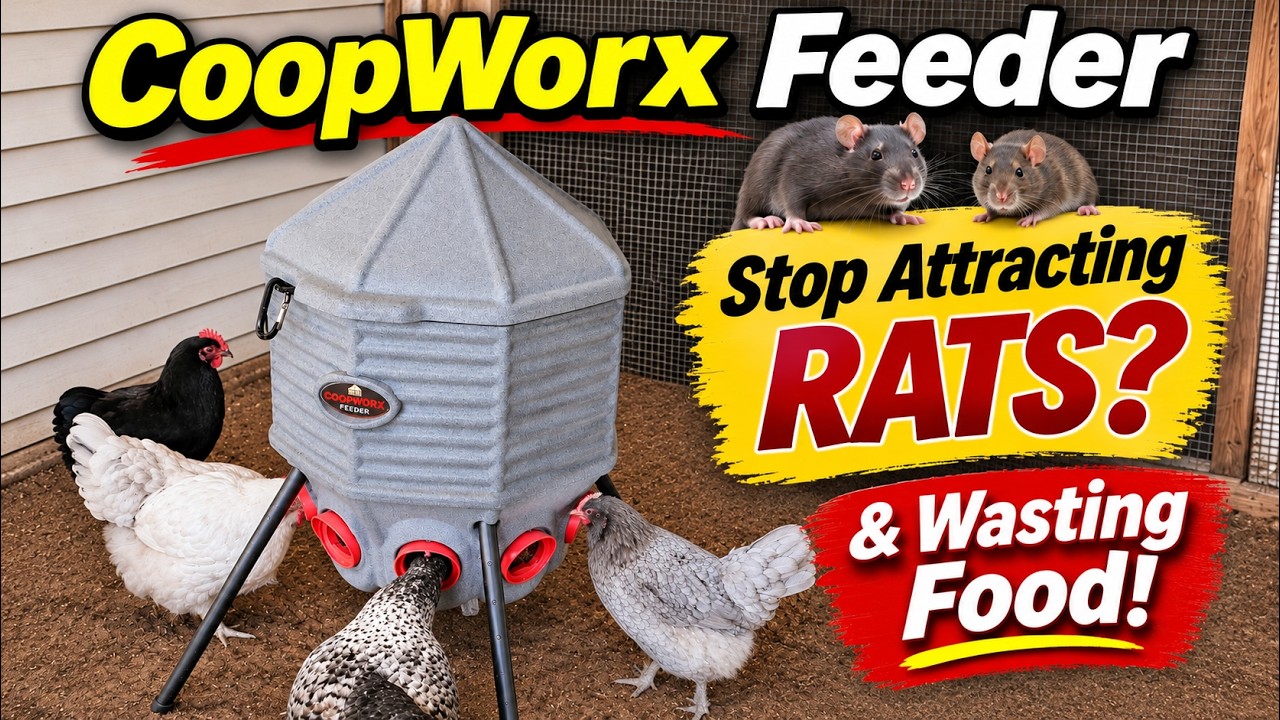
Feed waste was my biggest problem. Our girls scratch feed out, toss it on the ground and dump feeders. Since we started using our CoopWorx feeder, I’ve had literally no feed waste and I see no feed on the ground at all. Less spilled feed means less wasted money and fewer easy meals for rats and mice.
There was a bonus I didn’t expect. Because it’s big and has individual feeding ports, several hens that don’t always get along at the feeder can eat at the same time. Once their heads go into a port they can’t really see each other, so they stay in their own lane. It’s made feeding time much more peaceful. For what I bought it for, I give it a 10 out of 10.
Is the CoopWorx feeder rodent-proof? No. The feeding ports don’t close, and rats and mice can climb and jump, so they could still reach the feed if they can get to the feeder. If you get one, keep it in a secure area that rodents can’t access, like we do. The feeder cuts down the spilled feed; your coop’s security keeps rodents out.
See the CoopWorx feeder: lddy.no/1qi9j · Discount code: 16i6
Affiliate disclosure: this is an affiliate link. If you buy through it, we may earn a commission at no extra cost to you. Our opinions are based on our own experience with our flock.
We’re also tracking how much feed we save, and we’ll share the numbers in a follow-up.
What else around the coop attracts rodents?
Look at what’s propped against or stacked right next to your coop: gardening equipment, a stack of firewood, anything under a tarp. Those make a perfect place for rodents to move in. Even right outside the coop, they can start chewing through your walls and into electrical wiring. Keep the area around the coop clear.
Why are rats dangerous for chickens?
Injuries: rats will gnaw on chickens’ feet, toes and the backs of their legs, and they can kill baby chicks.
Disease: rats carry harmful bacteria, including salmonella, and can contaminate feeders, waterers and bedding.
Ammonia: rodent urine adds to ammonia buildup in the coop.
Stress: picture your hens trying to rest on the roost while something crawls around them in the dark. They can’t tell whether it’s a predator, and that’s frightening for them.
How we got rid of the rats in our coop
Mark handled the ladder work. We put a large board on top of the hardware cloth that covers our bantam coop and stapled sticky traps down all over it, up where the chickens can’t reach. We caught four rats the first night, and since then I’ve seen no new signs of any more. Along with that, our birds’ water and feed are no longer left out overnight, so there’s nothing in the coop for a rat to come back for.
What’s the safest way to trap rats around chickens?
Choose a method your chickens can’t reach. Bucket traps, snap traps, sticky traps or store-bought traps can all work, but a chicken could be badly hurt by a snap trap or panic and injure itself on a sticky trap.
Never use poison. Plenty of chickens will eat a mouse, and if that mouse was poisoned, you know how that story ends.
Act immediately. Waiting isn’t an option. Fast action is the key to keeping it under control.
Call a professional for an infestation. If it’s more than you can handle, get help.
Frequently asked questions
Can rats hurt chickens?
Yes. Rats can bite chickens’ feet, toes and legs, kill baby chicks, spread bacteria such as salmonella, and contaminate feed, water and bedding.
Is it safe to use rat poison around chickens?
No. Chickens will eat mice, and a poisoned rodent can poison a chicken. Use traps placed where your chickens can’t reach them instead.
Should I remove my chickens’ water at night?
For a small backyard flock, taking waterers up after the flock goes to roost and refilling them fresh in the morning removes an overnight water source for rodents.
Is the CoopWorx feeder rodent-proof?
No. Its feeding ports stay open, so keep it in a rodent-secure area. What it does is stop feed waste, so there’s no spilled feed on the ground to attract rodents.
When should I call a professional for rats in my chicken coop?
If you find an infestation that’s more than you can handle yourself, call a professional right away. Waiting only lets the problem grow.
Get the monthly Coop Scoop newsletter
Real backyard chicken tips and flock updates from Donna, once a month. Join Donna’s free newsletter.
Read next: How do you predator-proof a chicken coop? · Why count your chickens every night? · How to clean a chicken coop for winter
About the author
Donna Little runs The Coop Scoop with her husband, Mark, in Jonesboro, Georgia, raising a backyard flock of about 40 chickens plus quail and sharing what really happens in their coop on YouTube.